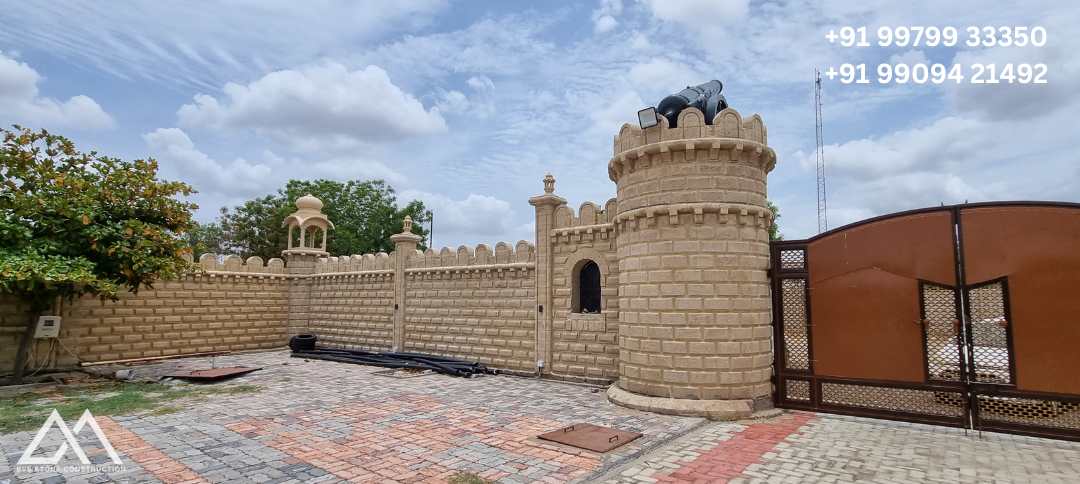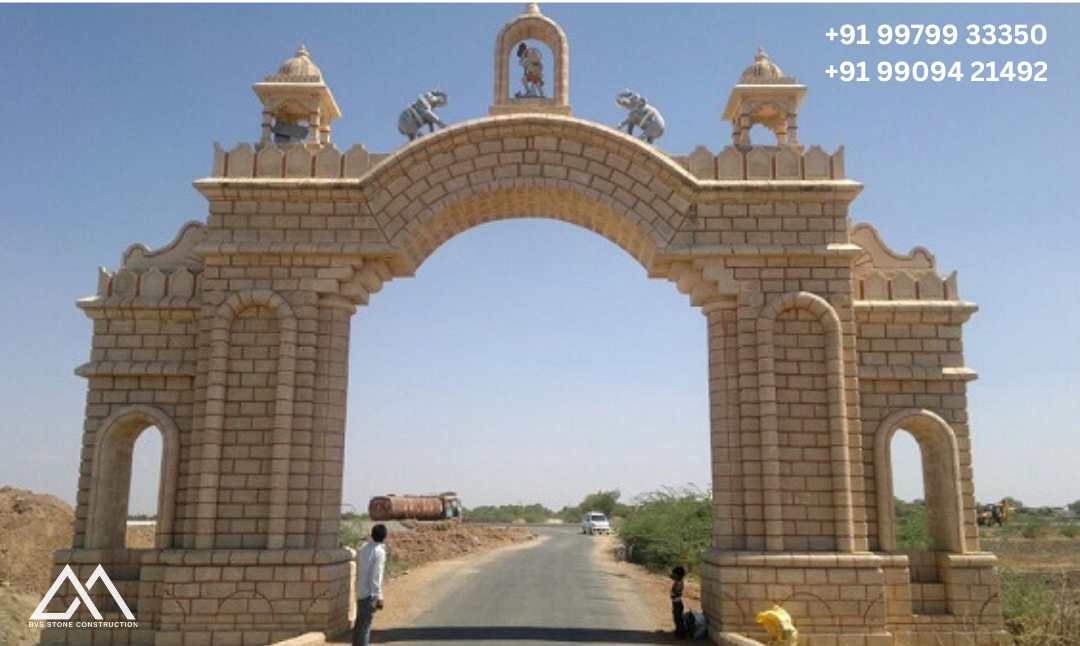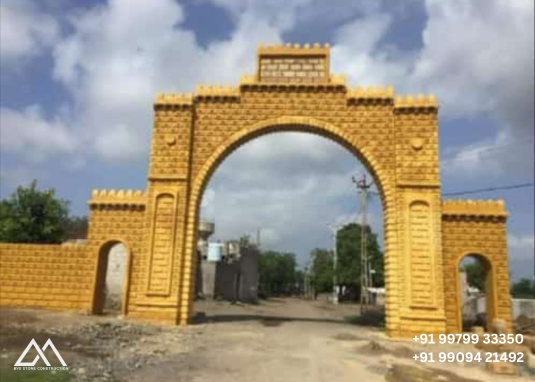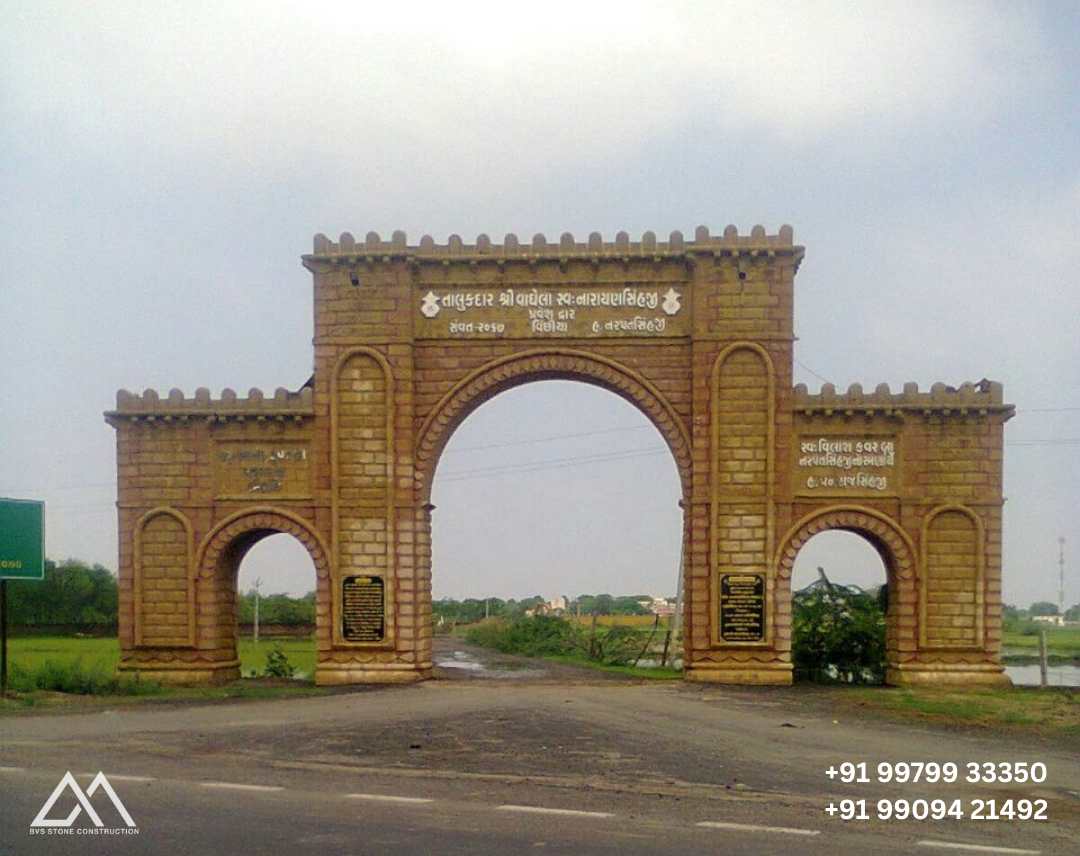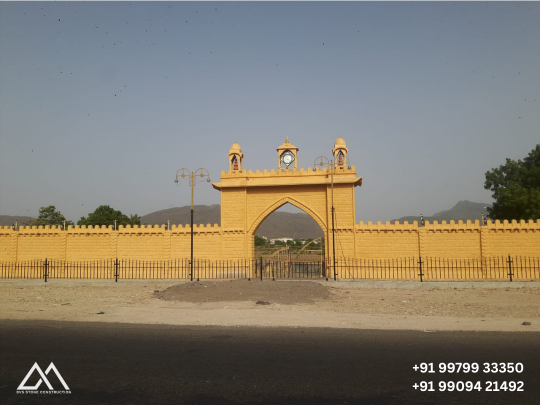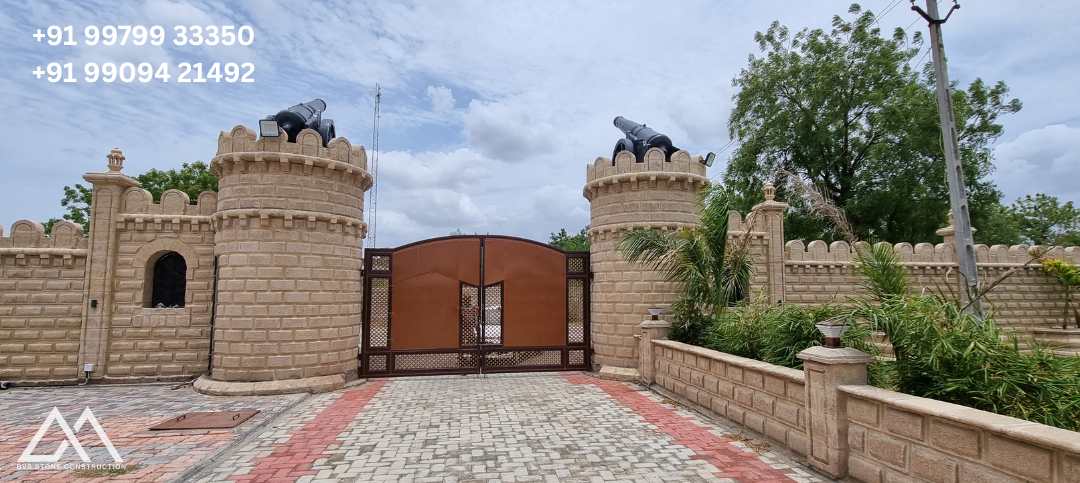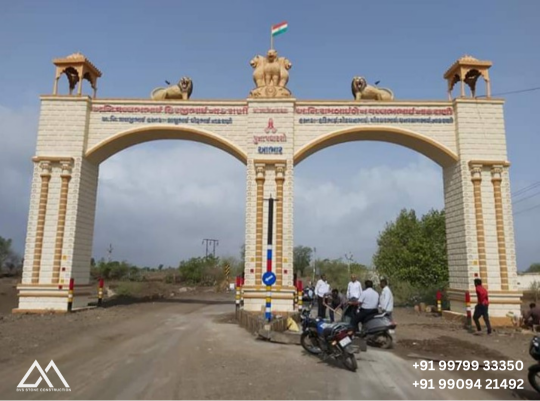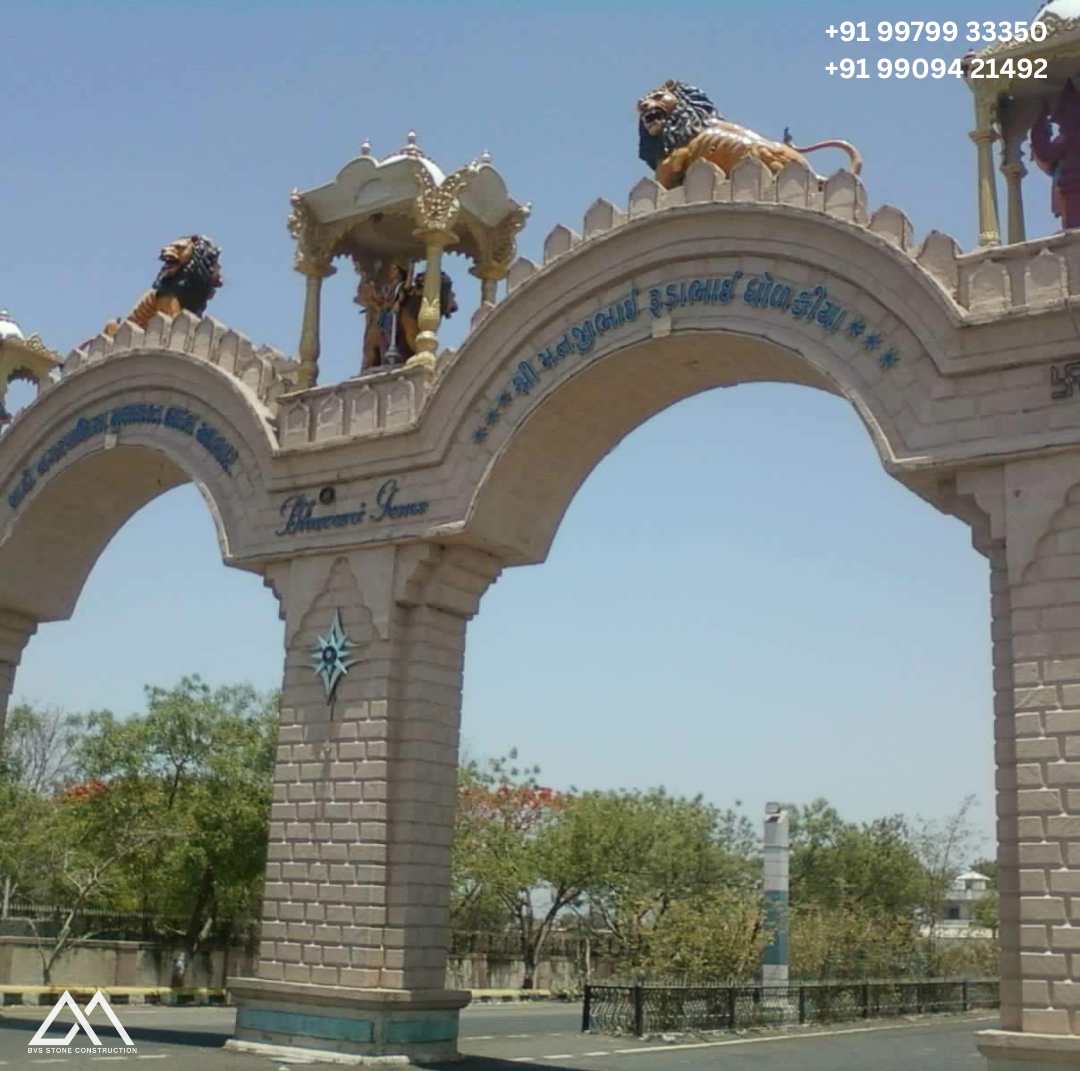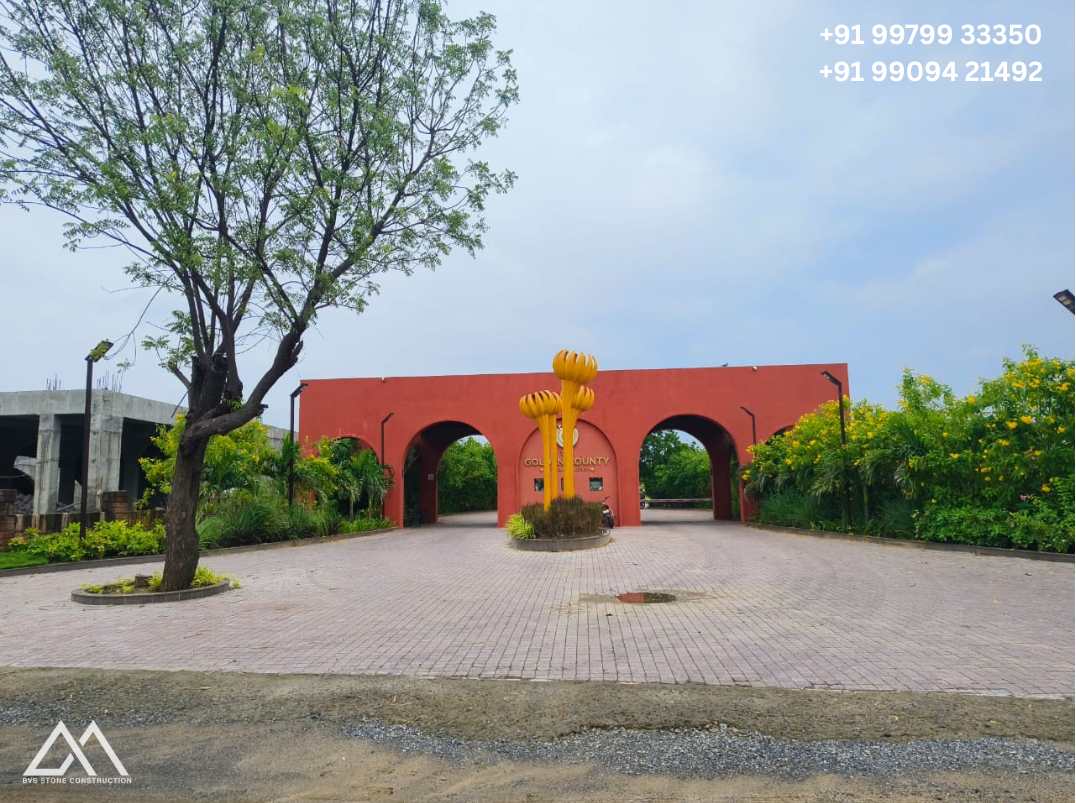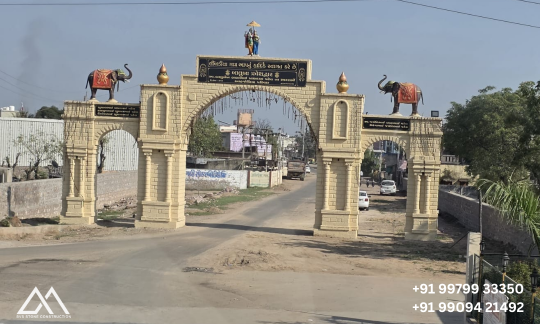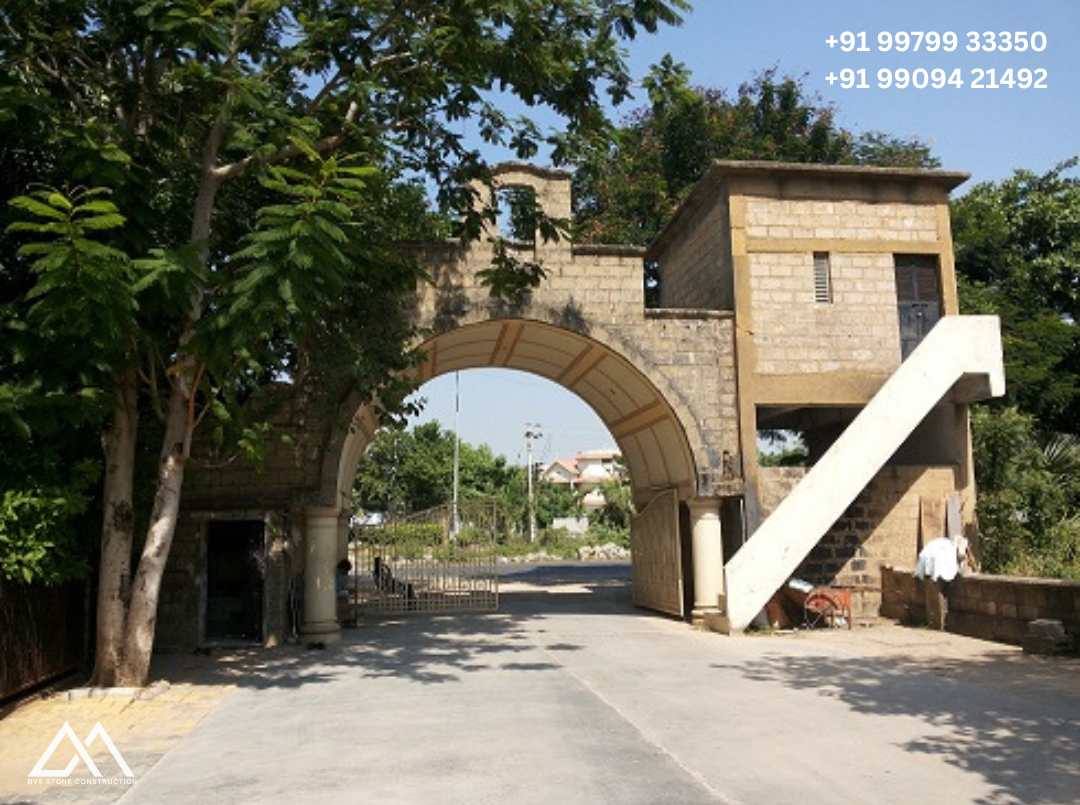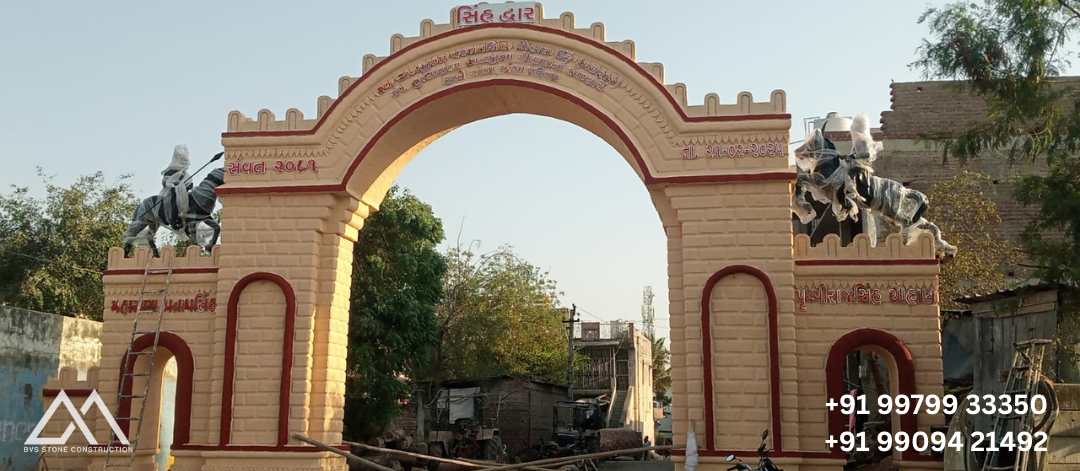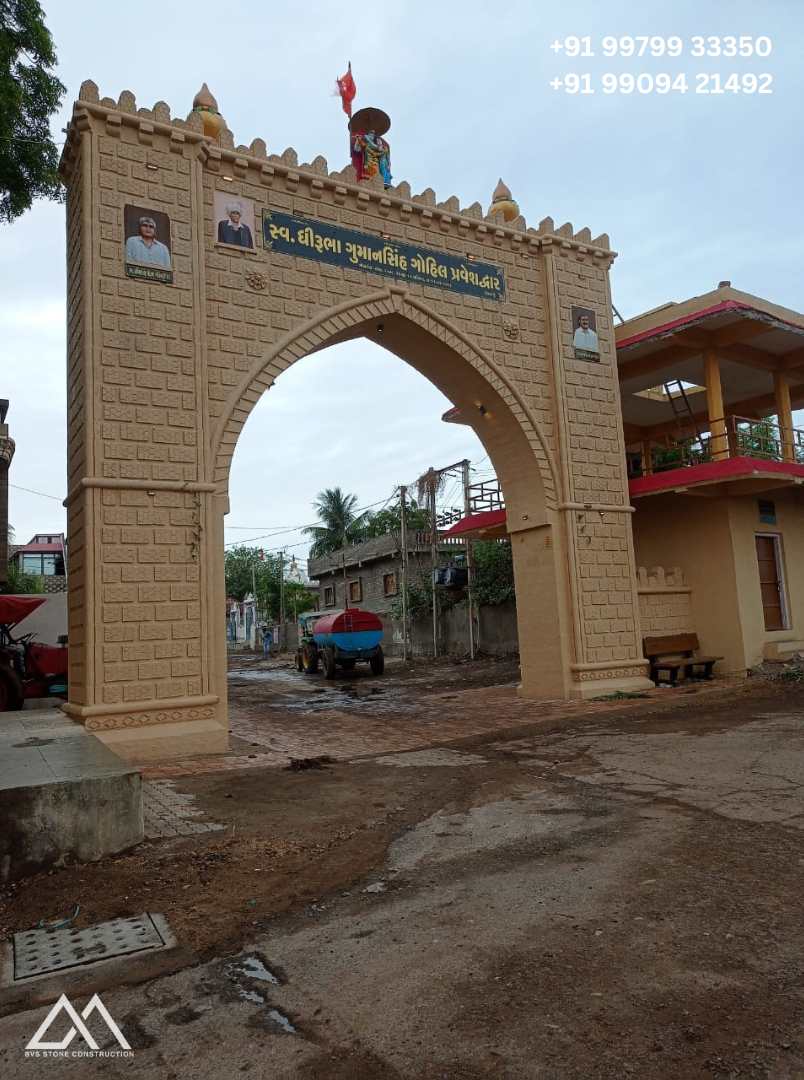
A Rajwadi gate is an announcement. Drawn from the palace architecture of Gujarat and Rajasthan, it combines mass, carved ornament and a deliberate sense of threshold, you are meant to notice passing through it.
The most common mistake in modern Rajwadi work is applying carving to a badly proportioned frame. The style depends on specific relationships, pier width to opening, cornice projection to pier height, the height at which the arch springs. Get those right and even restrained carving looks correct. Get them wrong and no amount of detail rescues it. We set out every gate at full size before cutting begins.
Ornament is cut by hand, not routed from a template. Brackets, chhajja edges, column capitals and the torana over the opening are worked individually, which is why no two of our gates are identical. Motifs are drawn from traditional vocabulary and adjusted to the scale of the gate, a pattern that reads beautifully at two metres becomes noise at four.
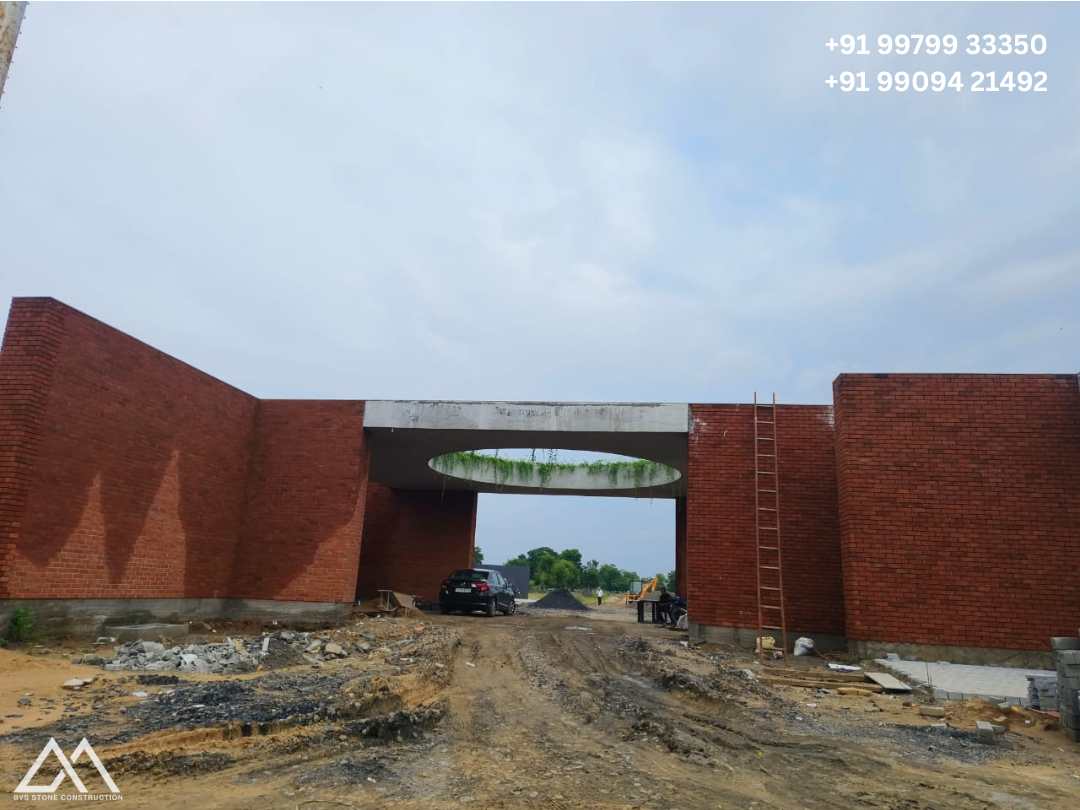
Behind the ornament, a gate is a pair of loaded piers carrying a heavy lintel and taking the swing load of the gate leaves. We found the piers independently, reinforce them, and build in the hinge pintles and any motor mountings during construction rather than drilling into finished carved stone afterwards. Electrical conduit for lighting and intercom is cast in from the start.