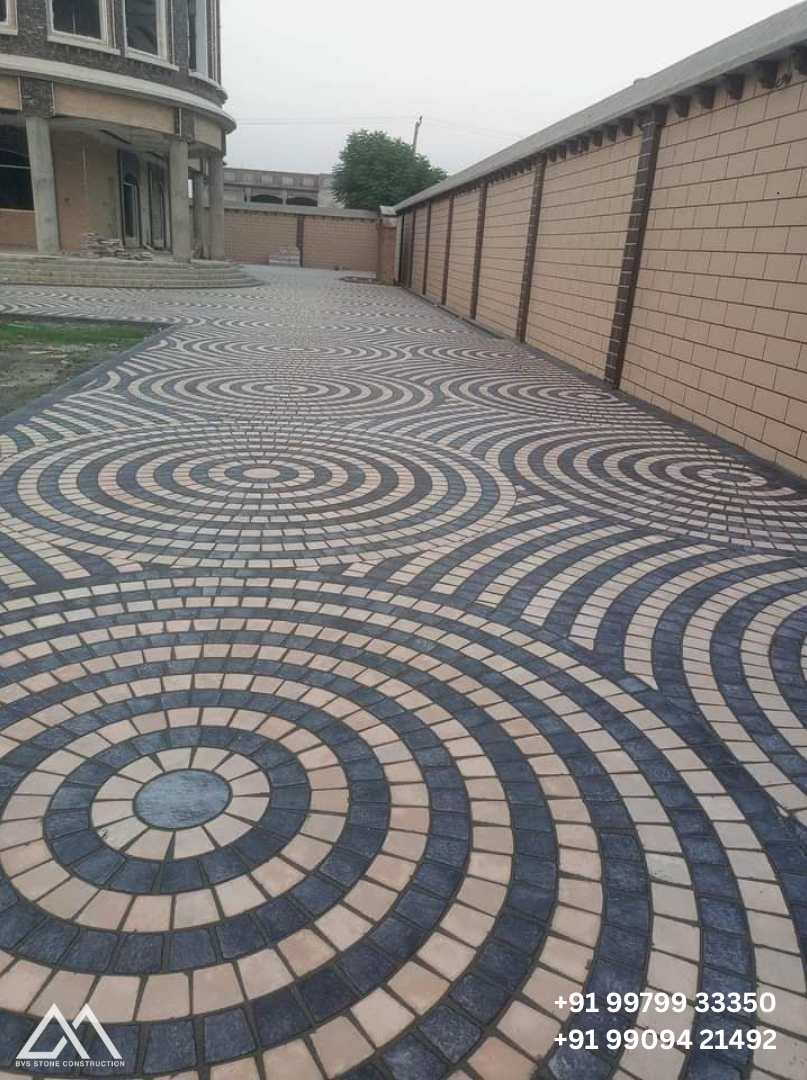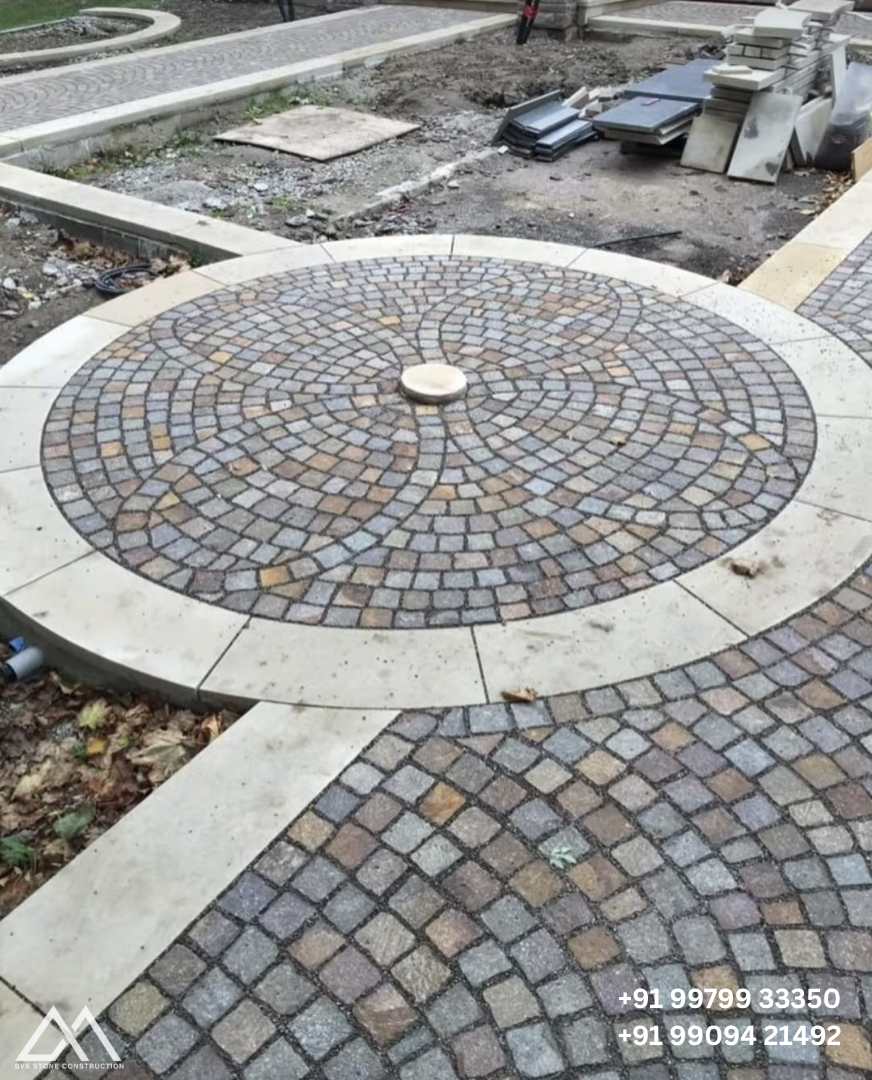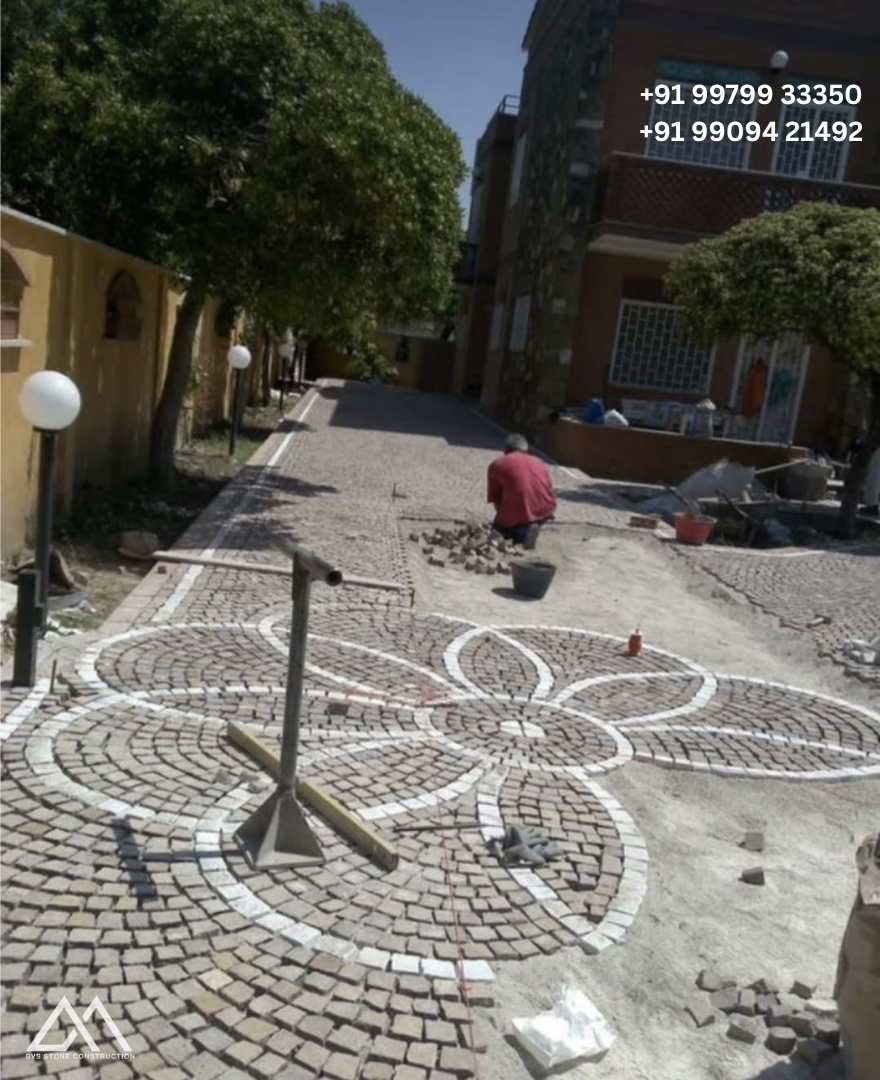
Cobbles and stone pavers give a driveway or courtyard a surface that improves with use rather than degrading. The stone itself will outlast the building, so whether the paving still looks right in fifteen years comes down almost entirely to what is underneath it.
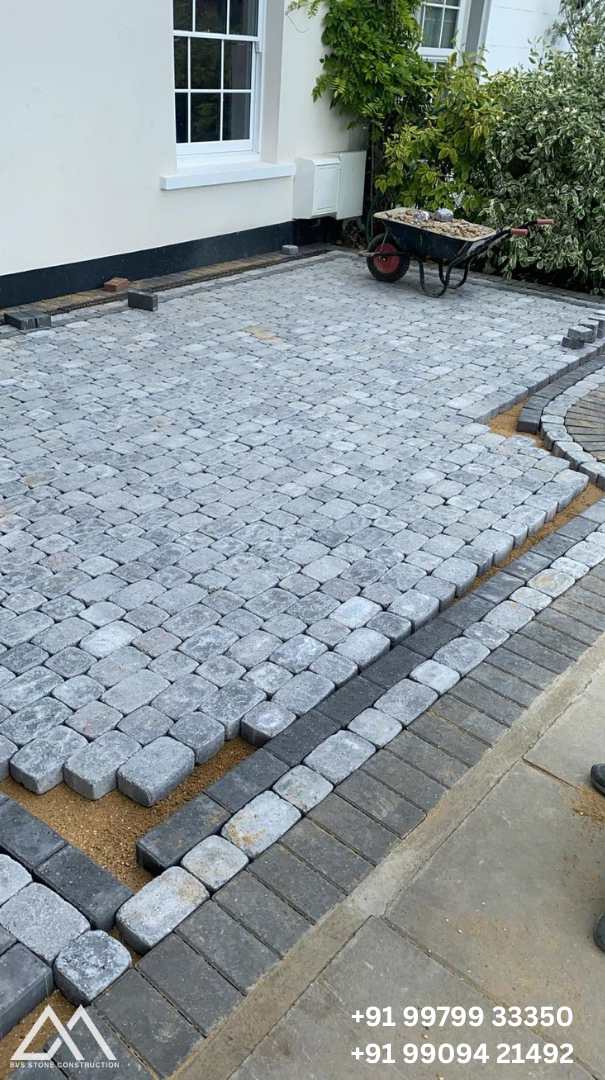
Sunken patches, rocking stones and weed growth through joints are all base failures, not stone failures. We excavate to a proper formation level, compact a graded sub-base in layers rather than in one dump, and lay on a consistent bedding course. On driveways taking car and occasional truck loads the sub-base is deepened accordingly, a path build-up under a driveway will fail, and it will fail in the wheel tracks first.
Paving must be set to a deliberate fall so water leaves the surface and goes somewhere specific. We set levels to drain away from the building and into a channel, gully or planted area. Where a courtyard is enclosed, we plan the drainage line before laying a single stone rather than discovering the problem in the first monsoon.
Laying pattern is chosen for the traffic as well as the look, interlocking patterns distribute load far better than stack bond on a driveway. Every paved area gets a proper edge restraint, because paving without a restrained edge migrates outward over time and opens the joints.