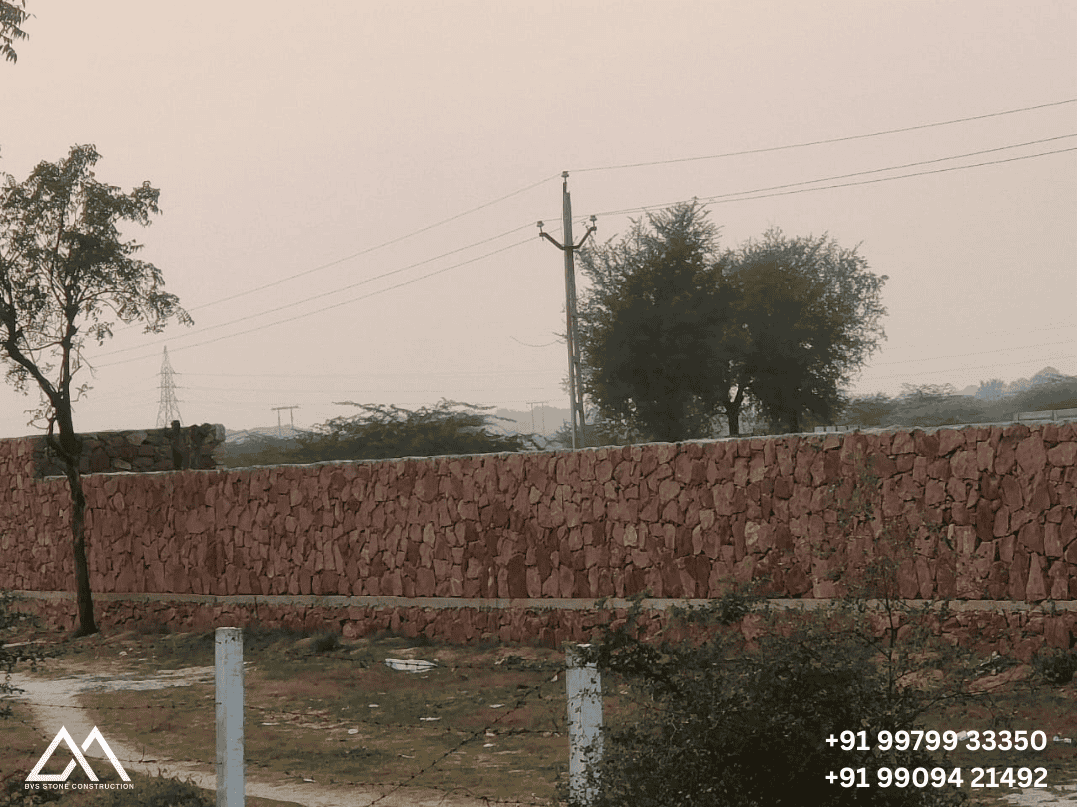
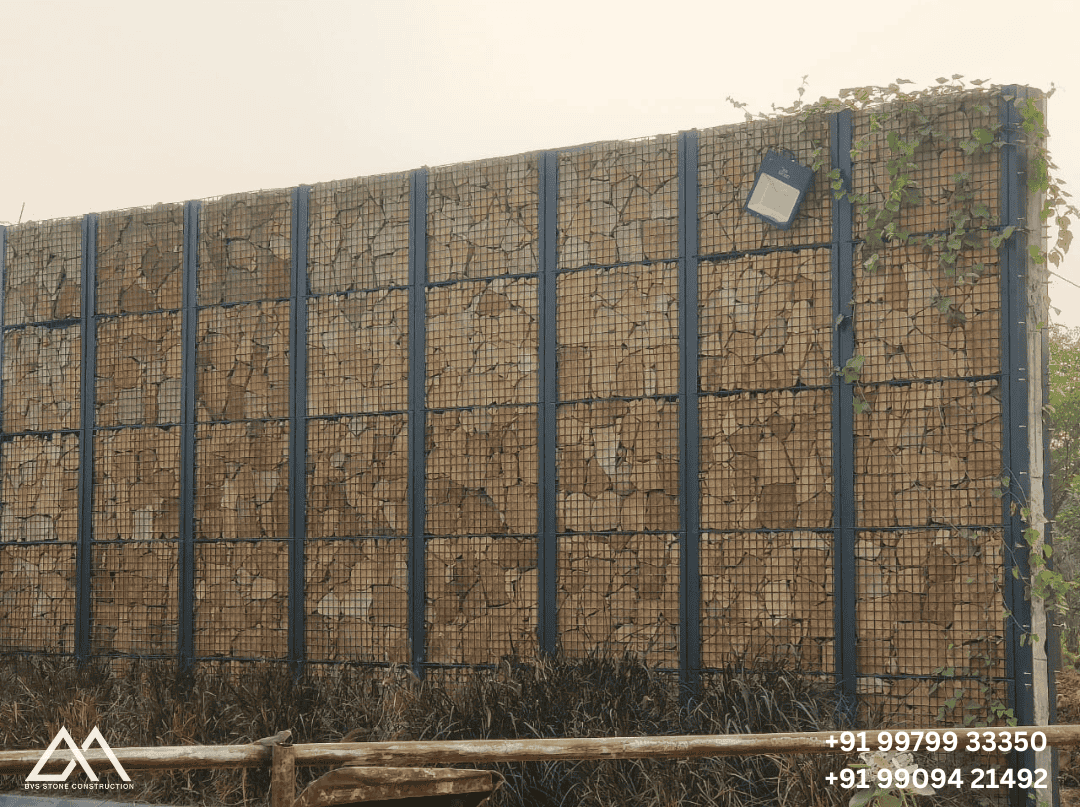
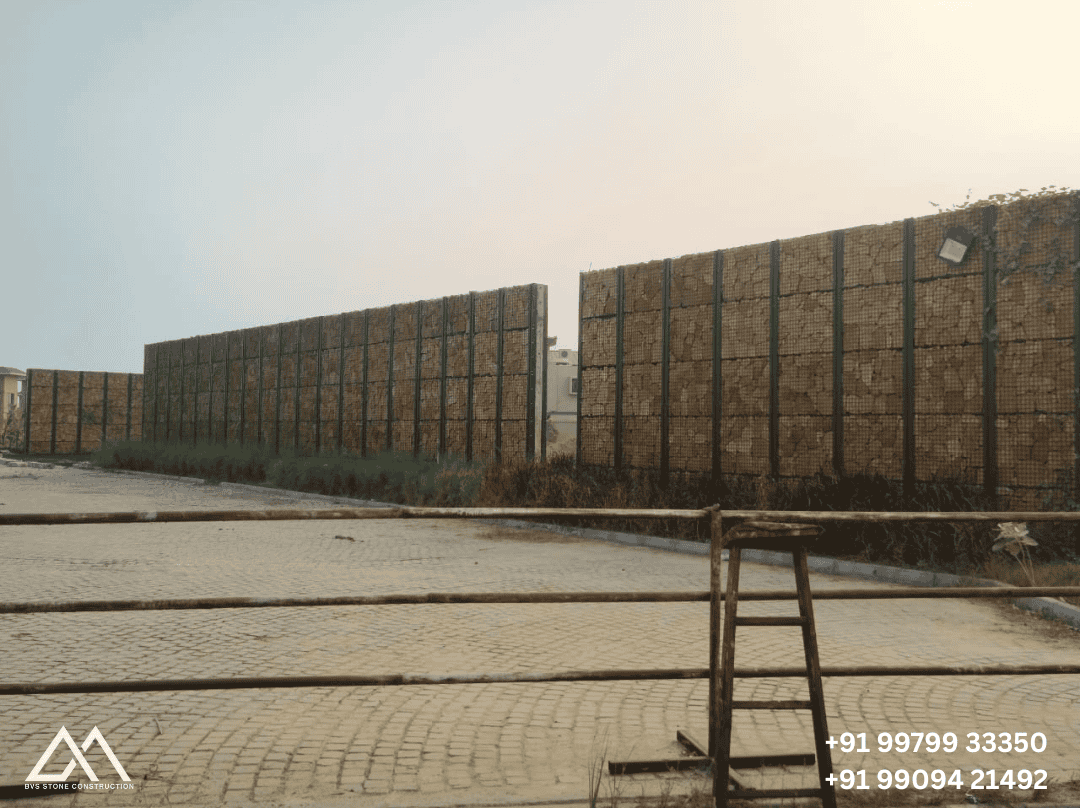
Random rubble is the oldest way of building in stone and still one of the most beautiful. Instead of sawing every block to the same dimension, the mason works with the stone as it comes out of the quarry, fitting irregular pieces together so that no two faces of the wall are alike.
A random rubble wall is only as good as the mason setting it. Each stone has to be chosen for the gap in front of it, turned until it seats on three points, and tapped down so it locks against its neighbours. Done well, the wall reads as one continuous surface with a lively play of light across it. Done badly, it becomes a patchwork of mortar with stones floating in it. This is the work we are most often called back to correct on other sites.
The face is what you see, but the wall is what holds. We build with proper through-stones bonding front to back at regular intervals, keep the hearting packed solid rather than filled with loose chips and mortar, and maintain a consistent batter on free-standing walls. Mortar joints are raked back so the stone stands slightly proud, which is what gives random rubble its characteristic depth of shadow.
Random rubble suits farmhouse and weekend-home elevations, garden and boundary walls, retaining walls where a softer visual line is wanted, and any project that should look rooted rather than new. It pairs particularly well with plain plastered surfaces, which let the stone do the talking.